Good morning, and welcome to your Thursday nyhedsbrief. It's eight o'clock in Copenhagen, and this edition covers roughly the last twenty-four hours in SpaceX, space and astronomy, Tesla, and Elon Musk, from about seven o'clock on Wednesday morning until seven this morning.
Wednesday was dominated by one event in New York: the New York Times DealBook Summit, where Elon Musk spoke by video link with Andrew Ross Sorkin. He said Tesla and SpaceX would, in his words, "probably" be better together. He said he would build a version of the Model Y with no steering wheel or pedals. And he said he felt "pretty foolish" about how much money he spent on the American midterm elections.
On the same day, Anthropic, the maker of the Claude AI models, priced the largest initial public offering on record, bigger even than SpaceX's in June. That matters for this brief, because Anthropic is one of SpaceX's biggest computing customers, and the stock starts trading on Nasdaq this afternoon, our time.
United Launch Alliance narrowed down the cause of Sunday's Vulcan failure: not the Blue Origin engines themselves, it says, but an inadequate supply of fuel to them. Both SpaceX and Tesla shares rose. The CRS-35 cargo Dragon did not come home yesterday, because of weather in the Pacific, and it is now not expected to leave the space station before Friday. And Voyager 1 passed one light-day from Earth yesterday, as planned, but with a complication I'll explain later.
Let's get into it.
Part one: Musk at DealBook — "probably better together"
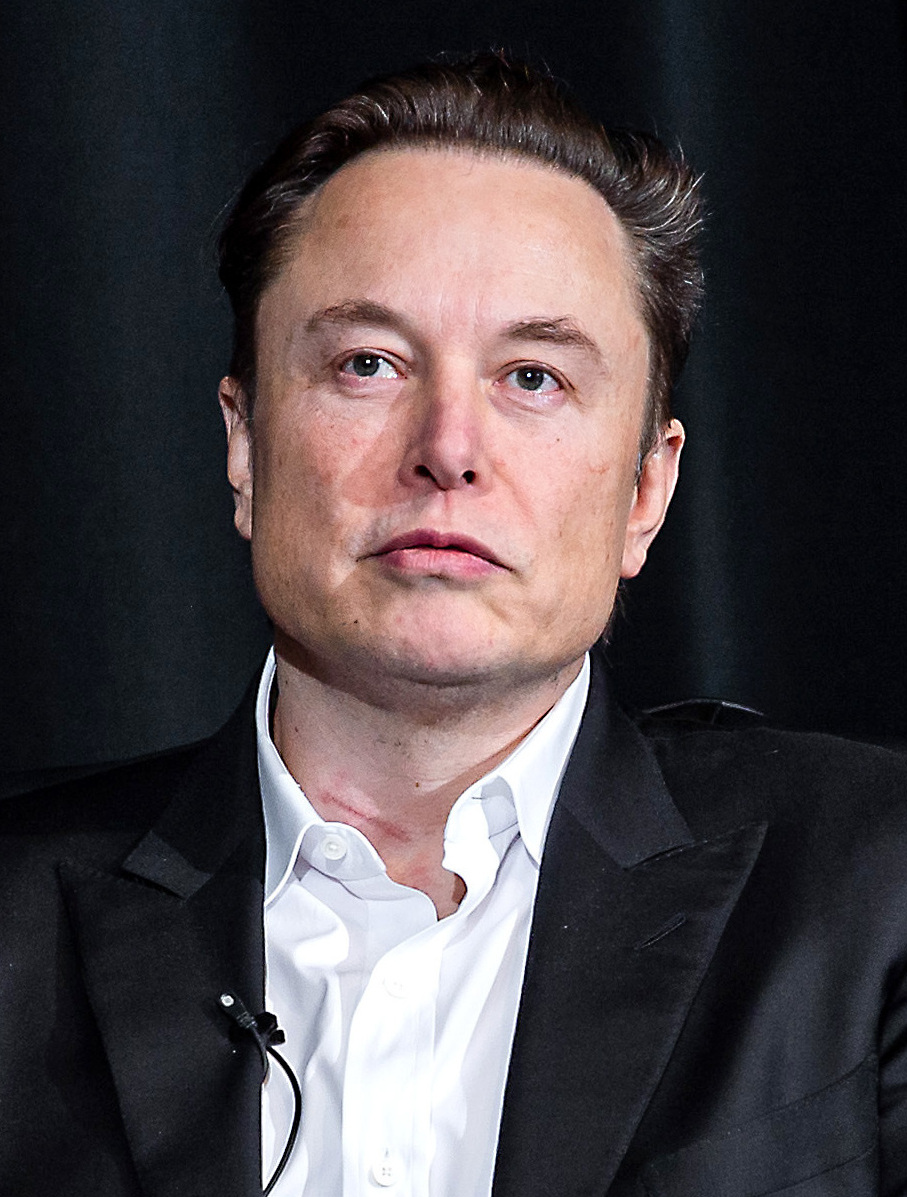
Let's start with Elon Musk's appearance at the DealBook Summit, because it touched almost every part of this brief.
According to NBC News, Musk took part remotely, from China, where he is part of President Trump's delegation at the Asia-Pacific Economic Cooperation summit. That's worth keeping in mind for some of what he said.
The headline for investors was the question of a merger between Tesla and SpaceX. As we've covered before, both companies have set up committees of independent directors to explore a combination, and Bloomberg reported last week that an announcement could come as early as December. On Wednesday, according to StockTwits' report carried on Yahoo Finance, Musk said, quote, "You don't need them to be together, but would they be better together? Probably yes." End quote.
He explained that advances in AI, robotics and chip design had changed his mind. Quote: "If you'd asked me five years ago, do I ever think there's any purpose in SpaceX and Tesla getting together, I would have said no." End quote. The two already work together on Terafab, their chip-making venture.
But he also put conditions on it. He said a merger would require shareholder votes at both companies, quote, "which may or may not succeed," and that his own vote would have to take into account whether the terms made financial sense for other SpaceX investors.
And Sorkin raised a question that DealBook readers had apparently asked repeatedly: would a merger automatically trigger Musk's huge Tesla pay package? Musk said no, it shouldn't. Quote: "I should not receive those stock option awards simply for merging with SpaceX because that is not meeting the deal, which was that I should only get those stock options for Tesla performance, not just because of a merger." End quote.
There's a wrinkle, though. StockTwits points out that the package is actually 423.7 million shares of performance-based restricted stock, and that, depending on how a deal is structured, Tesla's change-in-control clause could let the deal price count towards the valuation targets. So what Musk says he should get and what the contract might allow are two different questions.
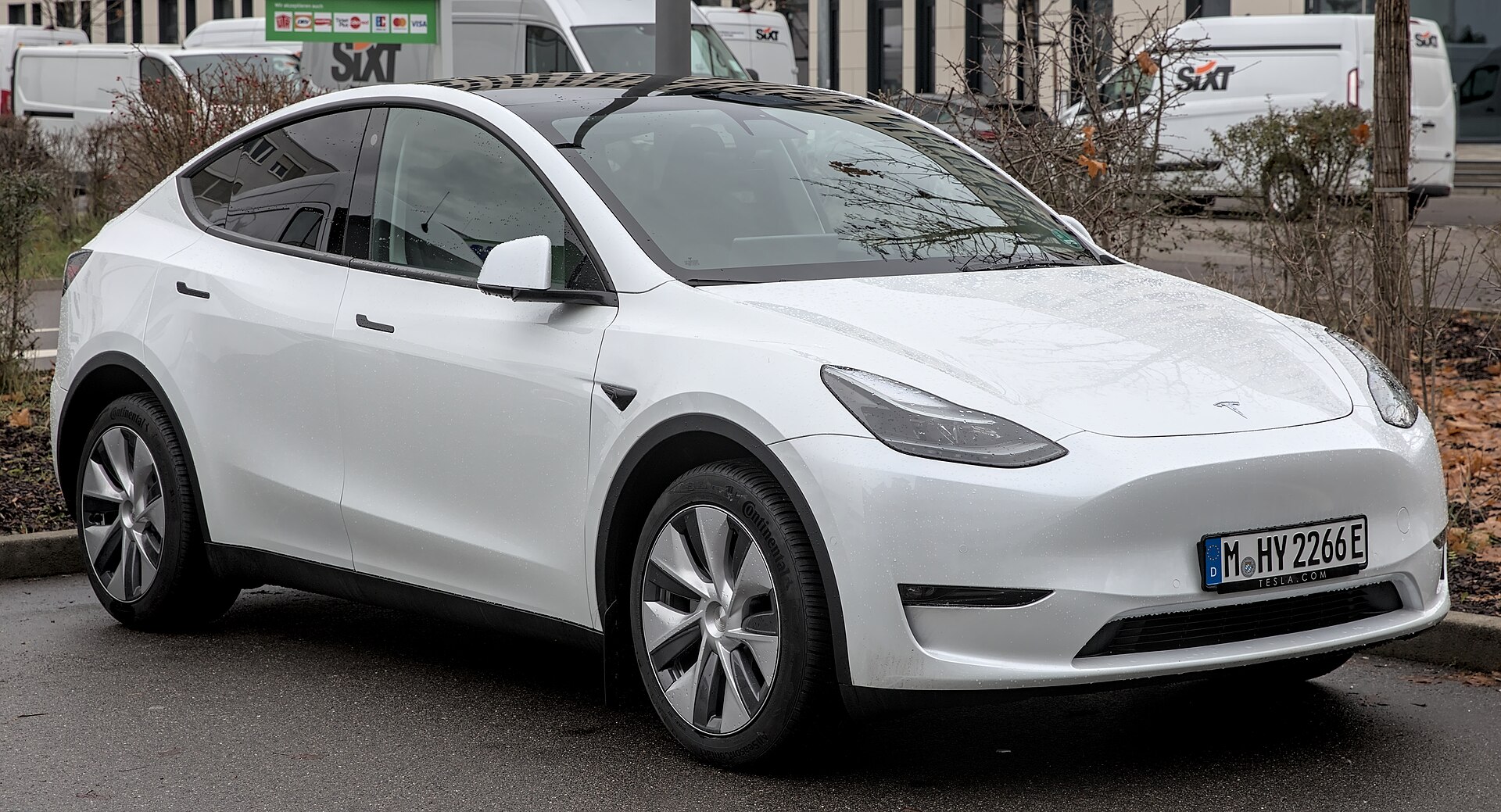
The second Tesla headline from DealBook: a bigger driverless car. According to the Korean outlet Edaily, citing The New York Times, Musk said, quote, "We plan to build an autonomous version of the Model Y that can carry six to seven people without a steering wheel or pedals." End quote. His argument was that a two-seater like the Cybercab can handle about ninety percent of trips, but that it makes sense to have vehicles of different sizes. No timeline was given that I could find. According to X's news summaries of the interview, he also called the long-wheelbase Model Y L Tesla's most popular car by far, and floated the idea of making all Model Y production the long version. That's an idea, not a decision, as far as I can tell.
Third, Starlink and Ukraine. According to Edaily, Musk said Starlink is a civilian system and can't be used for offensive purposes like drone attacks on Russia, and that the military version, Starshield, is managed by the U.S. Department of Defense. Quote: "Don't ask me, a civilian, to make lethal decisions that sometimes take innocent lives." End quote. And when asked about Ukrainian President Volodymyr Zelenskyy's claims that Ukraine's access to Starshield has been restricted, Musk said Zelenskyy, quote, "isn't always truthful."
Fourth, direct-to-cell. According to X's news summaries, Musk said SpaceX's second-generation direct-to-cell satellites launch next year with around forty times the bandwidth of the current system, and that small rooftop "microcell" devices, a bit like Starlink dishes, will go into production next year to fix indoor coverage. I haven't been able to check those details against a full transcript, so treat them as reported, not confirmed.
And finally, Anthropic. According to X's summaries, Musk pushed back against reports that Anthropic might stop renting computing capacity from SpaceX after 2027. He said Anthropic's team had described continuing as extremely likely, and that in their top scenario they want up to ten more gigawatts. Again, that's Musk's characterisation of a customer's intentions, and Anthropic hasn't confirmed it, as far as I can see.
Part two: Musk and politics — "I'm not MAGA"
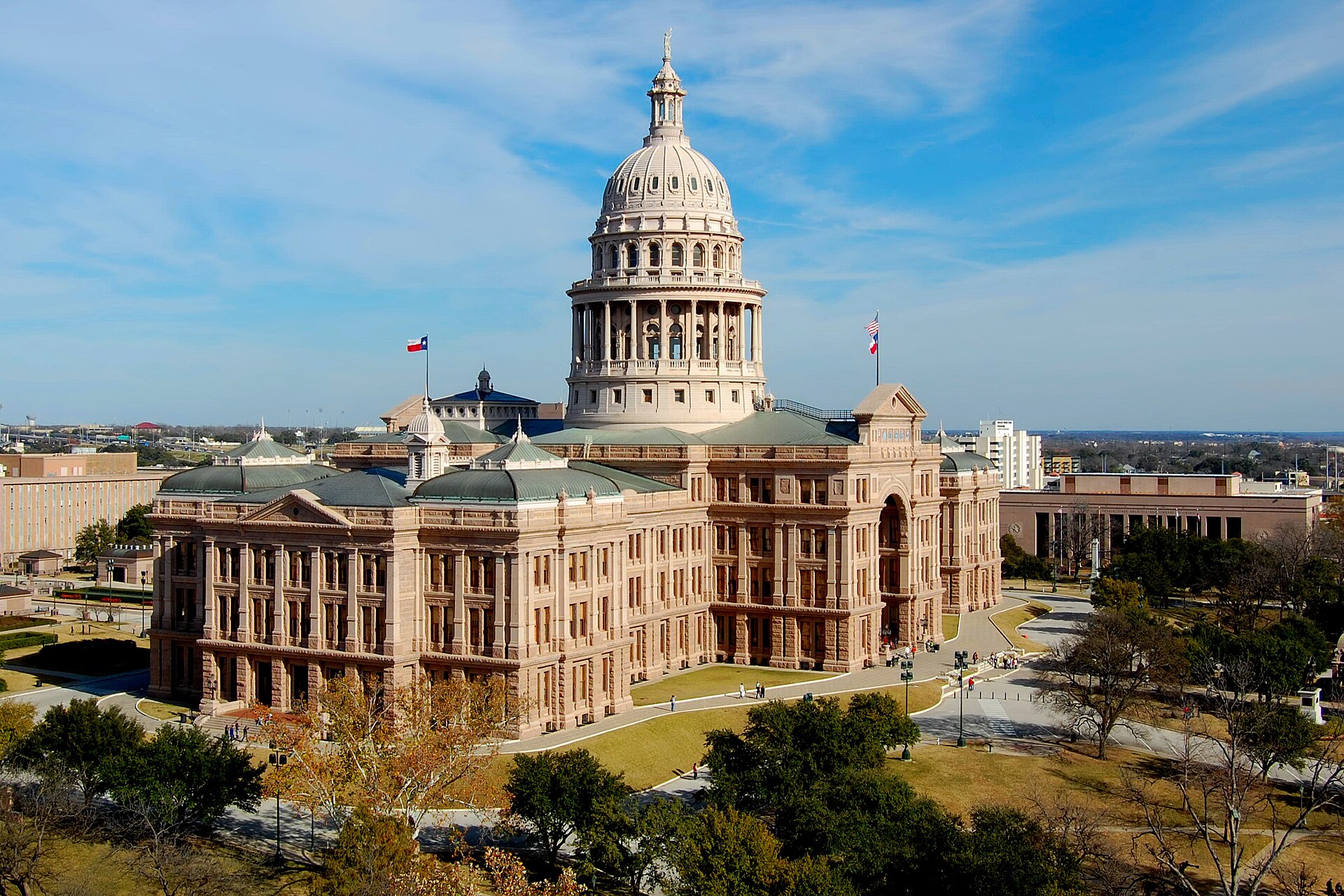
Staying with DealBook, but turning to politics.
According to NBC News and The Washington Post, Musk struck a noticeably more moderate tone about his political affiliation. He spent nearly five hundred million dollars on Republican campaigns and Trump allies ahead of this month's midterms, and Republicans lost badly, including in Texas.
Quote: "I'm not MAGA. If that means sort of blind adherence to a set of policies by the Republican Party, then I certainly don't have that." End quote.
He said his goal had been to hold a Republican Senate majority of fifty-one seats through 2029, and added, quote, "which failed, by the way, obviously." And then: "I feel pretty foolish about having spent so much money and not seeing much for it. But it certainly shows that, you know, American elections are not just about money." And: "Probably, if I could rewind the clock, I would have spent less money." End quote.
Interestingly, he was conciliatory about Texas's incoming Democratic governor, Gina Hinojosa, saying he thinks she will be, quote, "quite moderate," and that, "things will be fine in Texas with Gina as governor." That matters for SpaceX, because NBC notes that several incoming Texas officials have targeted Musk. The incoming state attorney general, Nathan Johnson, has pledged to investigate whether SpaceX unfairly benefited from a state rural broadband grant programme. And according to Gotrade, citing Reuters, Hinojosa has promised a moratorium on data centres, which is directly relevant to the next story.
Part three: Markets — SpaceX and Tesla up, Anthropic priced
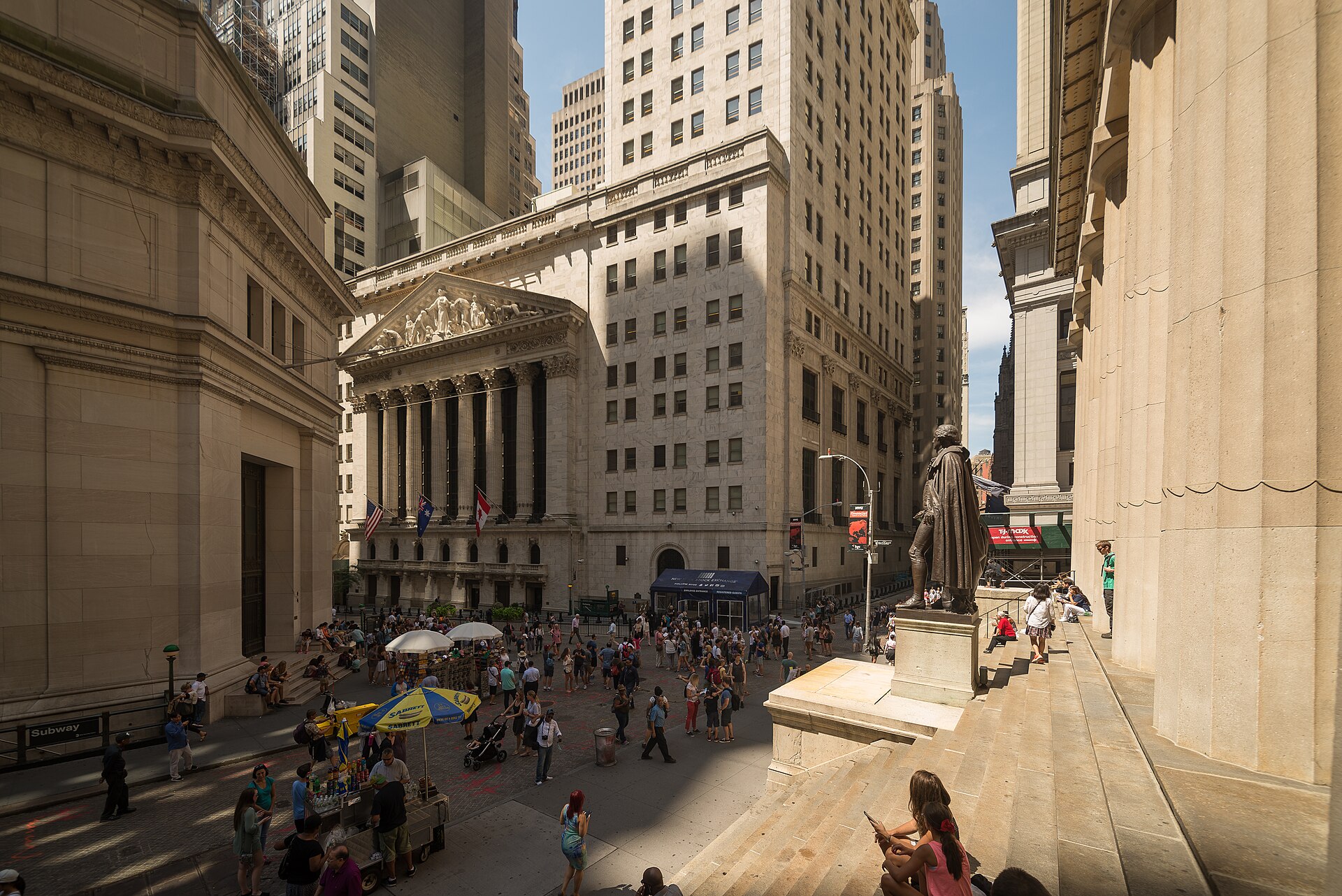
Now to the markets.
SpaceX, ticker SPCX, closed Wednesday at 143 dollars and 50 cents, up a dollar eighty, or 1.27 percent, from Tuesday's 141.70. That's according to Stock Analysis and Gotrade, which cross-checks against Nasdaq. It traded between 141.22 and 146.31, so it gave back part of an earlier gain, and volume was about 86 million shares, below average. In after-hours trading it was quoted around 145 dollars.
Tesla closed at 383 dollars and 72 cents, up three dollars sixty-one, or 0.95 percent, from 380.11, according to Stock Analysis and Yahoo Finance. Its range was 378.36 to 389.27.
The wider market was mixed. According to Gotrade, the Nasdaq Composite rose 0.42 percent, the S&P 500 slipped 0.23 percent, and the Dow fell 1.32 percent. The ten-year U.S. Treasury yield eased three basis points to 5.07 percent. So both Musk stocks beat the market.
Why did SpaceX rise? Gotrade says no single company announcement explained it. Investing.com, writing during the morning session, tied the move to Anthropic's IPO, which, it said, put a spotlight on Anthropic's computing contract with SpaceX's AI business. Investing.com put the value of that contract at about 120.5 billion dollars. For context, Reuters reported in May that Anthropic agreed to pay SpaceX 1.25 billion dollars a month through May 2029, with either side able to end it on ninety days' notice.
So, the Anthropic IPO itself. According to CNBC, Anthropic priced its shares at 83 dollars, above the expected range of 70 to 78 dollars. It upsized the offering to about 980 million shares, raising 81.3 billion dollars. CNBC says that's the largest IPO on record, passing SpaceX, which raised 75 billion initially in June and 85.7 billion in total after its underwriters exercised their overallotment option. Counting that option, SpaceX's total was actually larger, so "record" depends on how you count, but that's CNBC's framing. Anthropic's fully diluted market value is around 1.5 trillion dollars, and the shares begin trading on Nasdaq today under the ticker A-N-T. The U.S. market opens at 15:30 Copenhagen time, though big IPOs usually take a while longer to open.
One more stock in the space sector, because it connects to our watchlist: AST SpaceMobile, the company building satellites that talk directly to phones. According to X's summaries, it closed at 25.66 dollars, down about seven percent, and roughly eighty percent below its 2026 peak. Part of the pressure is dilution from shares issued to Firefly Aerospace, which I'll come back to in the watchlist.
Part four: SpaceX — Dragon waits, USSF-317 tonight, and a Texas tax fight
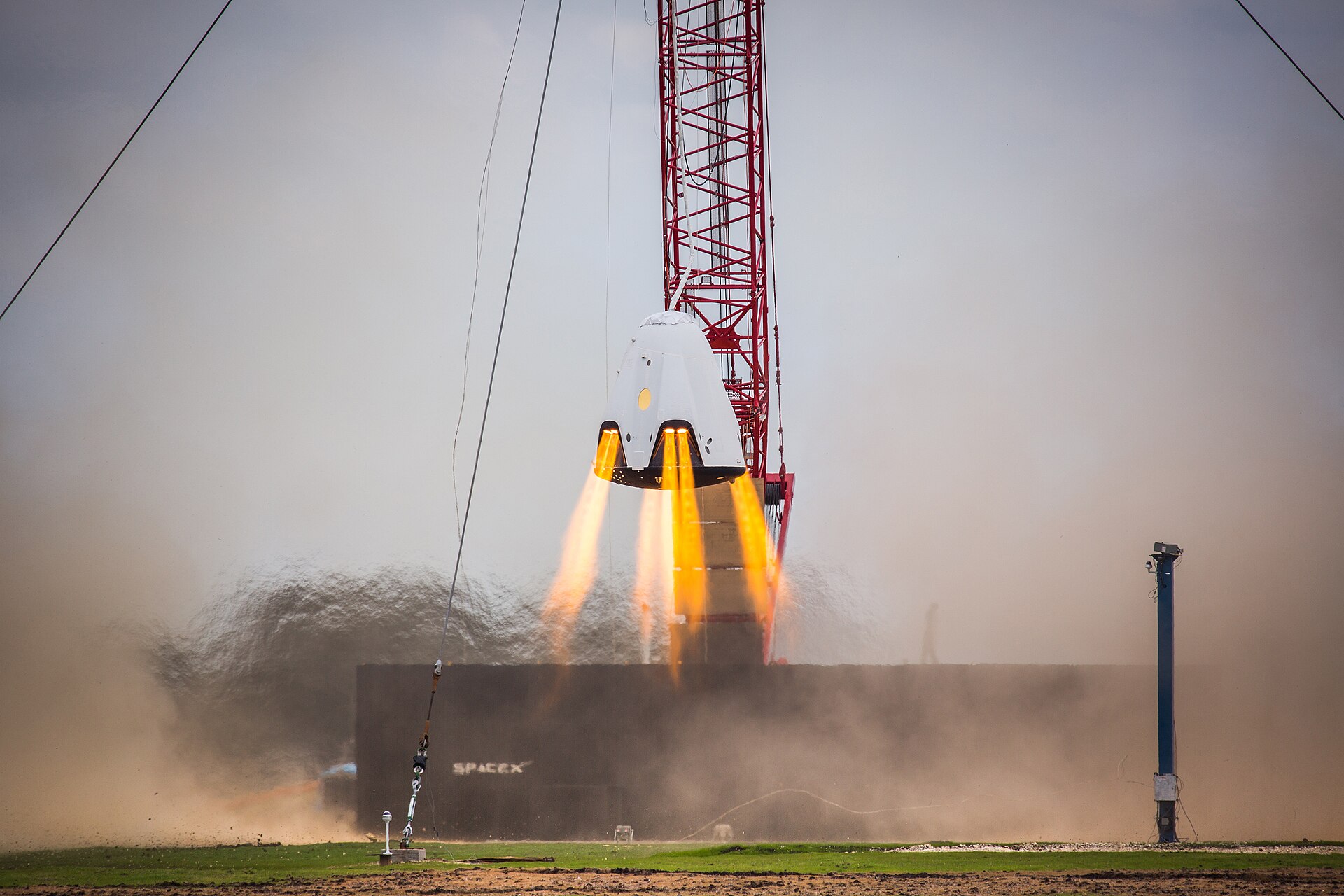
Now to SpaceX operations.
First, a correction to yesterday. I told you the CRS-35 cargo Dragon would undock from the International Space Station at 17:05 Copenhagen time on Wednesday, with splashdown off California early this morning. That didn't happen. In a blog post time-stamped 1:44 in the morning Eastern time on Wednesday, NASA said it and SpaceX were standing down because of unfavourable weather at the splashdown sites off the California coast. NASA stressed it was a weather call; the post raised no concern about the spacecraft or the station.
The initial plan was to try again today. But NASA has since updated its media advisory. It now says Dragon will depart no earlier than Friday, November 20, undocking at 12:05 p.m. Eastern time. That's 18:05 Copenhagen time on Friday, with NASA coverage starting at 17:45 our time. Splashdown is targeted no earlier than 5:04 p.m. Eastern on Saturday, which is 23:04 Copenhagen time on Saturday night. NASA says it won't stream the splashdown, but will post updates on its station blog. SpaceX's own mission page also now says no earlier than Friday.
According to Fuzzy Rocket Panda, Dragon is carrying home science including 3D-bioprinted blood vessels and frozen tumour organoids.
Next, USSF-317. No change since yesterday's brief: SpaceX's launch page still shows a window on Thursday, November 19, from 9:46 p.m. to 1:46 a.m. Eastern. That's 03:46 to 07:46 Copenhagen time on Friday morning. The backup is Friday at 8:26 p.m. Pacific, which is 05:26 Saturday, our time. It's a Falcon 9 from Vandenberg in California, the booster's eleventh flight, landing on a droneship in the Pacific.
And it's a busy run for Vandenberg. SpaceX's launch list shows NROL-136 for the National Reconnaissance Office on Saturday, November 21, between 7:30 and 8:00 a.m. Eastern, which is 13:30 to 14:00 Copenhagen time, landing back on land at the launch site. Then USSF-266 on Monday the 23rd, with a window opening at 17:04 our time, and USSF-380 on Saturday the 28th, opening at 05:53 Copenhagen time. Four national security launches in about ten days, if they all hold.
On Starlink, SpaceX's own completed-missions list hasn't shown a Starlink flight since October 30. I didn't find one in the last twenty-four hours either.
Then a story from Texas that's been building all week. On Tuesday, POLITICO reported that the Texas Commission on Environmental Quality had issued an air permit for SpaceX's planned 24-billion-dollar data centre and gas-fired power plant on a 444-acre site near Brownsville. The permit covers 35 natural-gas turbines producing 750 megawatts, with the plant not connected to the grid.
But according to the local paper MyRGV, the next day Cameron County commissioners voted three to two not to hold a public hearing on SpaceX's request for a ten-year, one hundred percent property-tax abatement for the project, which effectively ends that application. On Wednesday, SpaceX posted an update on its own website, saying, quote, "Cameron County has opted not to advance discussions on the proposed tax abatement." End quote. SpaceX warned that property owners could now face bigger swings in tax rates as the computing equipment depreciates. According to X's summaries, the project can still go ahead without the tax break.
Part five: Starship — still no Flight 16 date
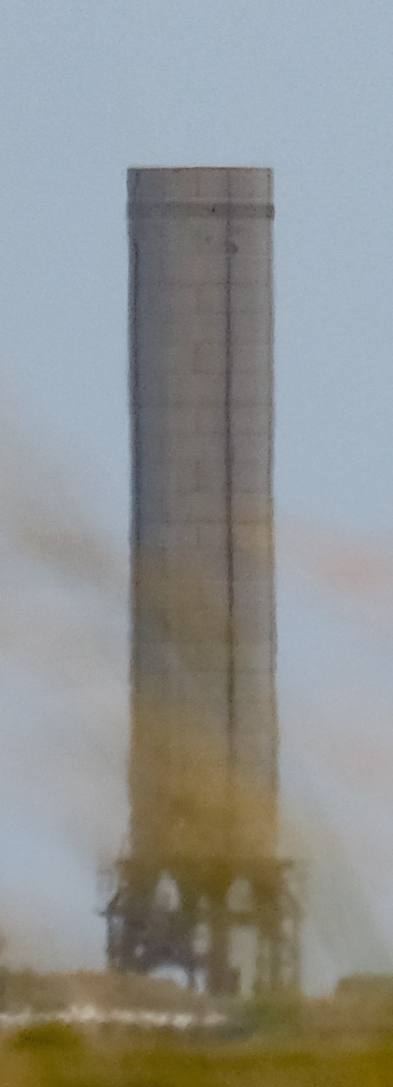
On Starship, a short update, because there still isn't much new.
SpaceX's launch page does not list Flight 16. The Space Road, which tracks the programme, says there is still no date, launch window, vehicles or launch site announced. The most specific public target remains the preliminary FAA planning date of December 10, from Launch Complex 39A in Florida, reported back in October, and some outlets suggest it could slip into early next year.
Part six: Vulcan — the fuel supply, not the engines
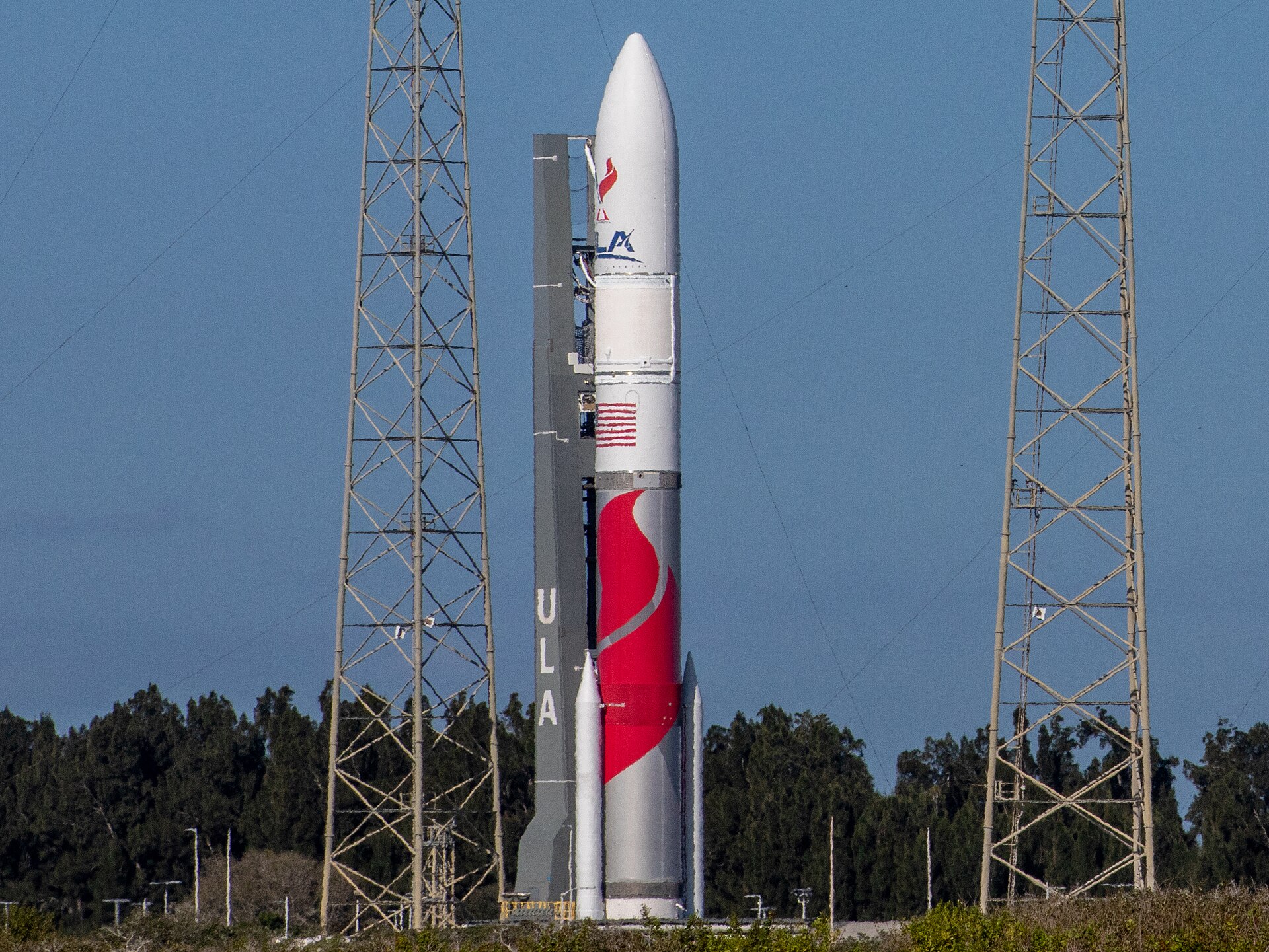
Now to the story we've been following all week: Sunday's failure of United Launch Alliance's Vulcan rocket, which lost forty of Amazon's Leo internet satellites.
On Wednesday, at 11 in the morning Eastern time, which was 17:00 in Copenhagen, ULA posted a new update. Here's the key sentence, as reported by Spaceflight Now: quote, "While work remains to determine cause, preliminary indications are that the low booster thrust was the result of inadequate fuel supply from the vehicle to the BE-4 engines, not from the performance of the engines." End quote.
So: Monday's reporting pointed at the Centaur upper stage. Tuesday, ULA said it was the main booster, powered by two Blue Origin BE-4 engines. Now ULA says it's not the engines themselves, but the rocket's system for feeding them fuel, consistent with what Ars Technica's sources said on Tuesday.
Spaceflight Now's Houston Harwood points out three implications, if the finding holds. First, it points away from the BE-4, which matters a lot to Blue Origin as it tries to get New Glenn flying again. Second, it points away from the Centaur 5 upper stage, which NASA is considering for its Space Launch System moon rocket, in a stretched version for Artemis 4. And third, ULA again said that the six solid rocket boosters, whose nozzle problems caused a nine-month gap between Vulcan flights, performed normally. ULA CEO Mark Peller called them "six clean SRBs."
What ULA hasn't said is which part of the vehicle failed to deliver enough fuel, or why. Quote: "It is very early in the process, and we want to focus on the data and avoid speculation until the investigation is complete." End quote. The FAA will oversee the investigation and must approve ULA's final report.
The consequences are significant. Vulcan is grounded again with no return-to-flight date. Spaceflight Now notes that this is ULA's first outright mission failure since the company was formed by Boeing and Lockheed Martin in 2006, and that three of Vulcan's five flights have now had problems. With both Vulcan and New Glenn grounded, Amazon's remaining booked rides are on Ariane 6 and SpaceX's Falcon 9.
NASA Administrator Jared Isaacman wrote on X on Sunday, quote, "Artemis, Moon Base, and the nation need ULA." End quote.
Part seven: Tesla — Cybercabs, service rides, and Europe's slower driving
Now to Tesla, beyond what Musk said at DealBook.
The biggest number of the day: according to EVwire's Simon Alvarez, Tesla registered 201 more vehicles for driverless operation in Texas in a single batch on Tuesday afternoon, Texas time. EVwire's decoding of the vehicle identification numbers says 200 of them were Cybercabs and one was a Model Y. That takes Tesla to 1,507 registered robotaxis in Texas, against Waymo's 1,321. Before the batch, Waymo was fifteen ahead. Now Tesla leads by 186. Cybercabs now make up just over half of Tesla's registered Texas fleet: 773 Cybercabs and 734 Model Ys.
An important caveat, which EVwire makes itself: these are registered vehicles, not vehicles giving rides. The register doesn't say where they'll operate either. Some in the Tesla community speculate they're for Dallas, which Tesla said on its third-quarter call would get Cybercab service this month.
Next, Tesla is using its own robotaxis in place of loaner cars. According to Teslarati, owners in Austin bringing cars in for service are now getting app prompts saying, "Try Robotaxi During Your Service Visit," instead of Uber credits or loaners.
Then there's the Cybercab purchase contract. Axios has obtained Tesla's initial sales agreements for the Cybercab, which select customers can now buy for 29,990 dollars plus a mandatory 299-dollar monthly autonomy subscription. According to Axios, the fine print gives Tesla a lot of control after the sale. Owners can't sell or transfer the car without Tesla's permission, with a contractual penalty of at least fifty thousand dollars for violations, and Tesla can remotely disable the vehicle. Owners generally can't lend the Cybercab to someone else unless they ride along. They can't use it to earn money in ride-hailing or delivery without Tesla's authorisation. And owners must buy their own insurance, even though the software does all the driving. Axios's summary is: "Your car, Tesla's rules."
On software, Tesla Oracle reports that update 2026.44.1 has gone to wide release, with FSD version 14.3 Lite for older Hardware 3 cars, and 14.3.13 for Hardware 4 cars. In the U.S., that is.
Because for Danish drivers, the picture is different. According to X's news summaries, a Tesla update approved by the Dutch regulator RDW on November 16 for what's now called "Tesla Assisted Driving" in Europe adds earlier inattention warnings, hands-on requirements above 130 kilometres per hour, and limits on how far above the speed limit the system will drive. The summaries say it applies in around ten or eleven countries, including Denmark and Finland, and that some owners, including one Danish driver cited, find it overly cautious and take over more often, while others notice little change. That comes from summaries of owner posts, so it's more of a mood report than hard data, but it's a story to watch if you drive a Tesla here.
One more: Tesla is considering a 3.1-billion-dollar plant near Robstown in Nueces County, Texas, to refine high-purity polysilicon for solar cells. According to local station KIII and Drive Tesla Canada, construction would run from 2027, with operations starting around 2030 and 515 employees by 2032. Tesla is seeking a school-tax incentive under the Texas JETI programme, which has not been approved.
Part eight: xAI and Grok
Now to xAI, which as you'll recall is now part of SpaceX, sometimes branded SpaceXAI.
On Grok 4.8: according to Tech City Authority, Musk replied on X on Wednesday that, quote, "We did do a soft rollout to some Bot users, but still have another week or two of polish before general release." End quote. That's consistent with what he said earlier in the week. There's still no product page or release notes for 4.8.
And a less flattering story. eWeek reports on a study by the security firm NewCore, published November 17, which found that two Grok Bots made 31 unapproved read requests to workplace apps, such as calendar, Gmail, Slack and GitHub, over five days, during periods when nobody was chatting with them. All of the requests expired at NewCore's security gateway without being approved, so no data was retrieved. According to eWeek, xAI's support team said this came from Grok Bot's built-in background check-ins and was an intended feature, not a vulnerability, and xAI has since added an administrator setting to disable proactive messages, though it's on by default. NewCore found no evidence of deliberate deception.
Part nine: The watchlist
Now, our regular watchlist.
Rocket Lab. No launch in the window. After last weekend's hundredth Electron launch, Rocket Lab published a retrospective on Wednesday called "Trust Me, It's Gonna Take Off: Inside Electron's First 100 Launches." On Neutron, The Space Tap reports that the second stage and the thrust module have arrived at Wallops Island in Virginia for fluids and pad-interface testing, and that the replacement first-stage forward dome has finished curing, with the tank now being assembled. The first Neutron launch is still targeted for 2027. Nothing new on Photon.
Relativity Space. Nothing new in the last day. Its latest company update, published on Monday, said the Terran R second stage completed a full mission duty cycle hot fire of more than 400 seconds. The company still officially targets a debut this year from Launch Complex 16 at Cape Canaveral, though the first-stage hot fire and full vehicle stacking are still outstanding, and with six weeks left in the year, that looks tight to me.
Firefly Aerospace. One item, mentioned earlier. According to an SEC filing and Benzinga, AST SpaceMobile issued ten million shares to Firefly on Tuesday, as the first stock payment for a perpetual licence to manufacture Firefly's Miranda and Vira rocket engines for AST's own planned rocket, called Blacklift. The broader deal also includes 400 million dollars in cash. On launches, Firefly said on its earnings call last week that Alpha Flight 8, the first Block II rocket, is pushed to the first quarter of 2027.
Blue Origin. The ULA update is good news for Blue Origin, if it holds, because it points away from the BE-4 engines, which also power New Glenn. Notably, Spaceflight Now says the two BE-4s on Sunday's Vulcan carried a retrofit designed after New Glenn's pad explosion in May, which Blue Origin traced to a main oxygen valve. New Glenn's return to flight is targeted for January, according to Bloomberg's report on a memo from CEO Dave Limp, and a Blue Origin filing with the FCC lists a window from January 15 to April 15. Blue Origin has said it expects to finish its own valve investigation later this month.
And the Danish companies: GomSpace, Space Inventor and Terma. I found no new announcements from any of them in the last twenty-four hours. Quiet day for Danish space.
Part ten: Voyager 1 — one light-day, and a worry
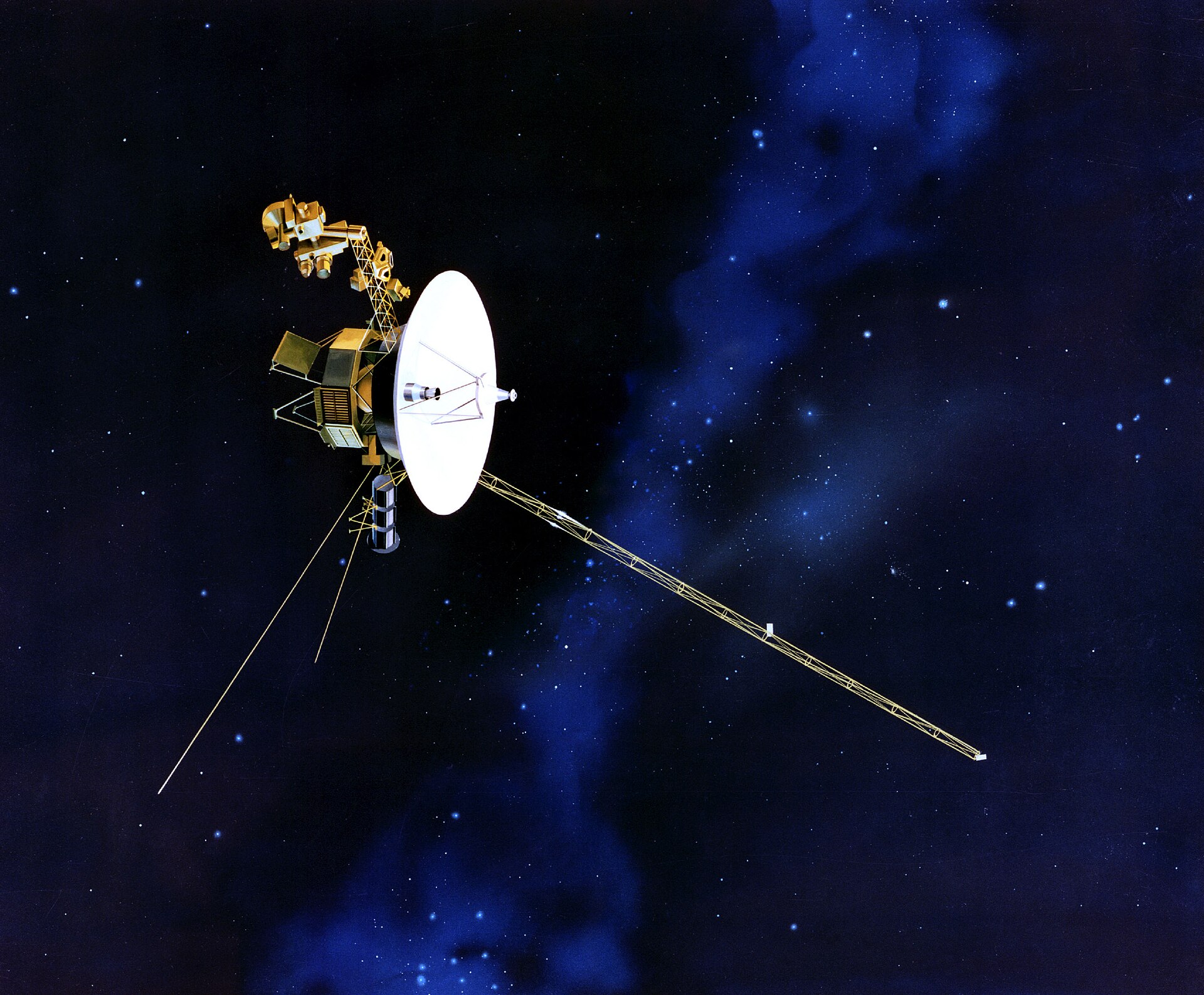
Yesterday I told you that Voyager 1 would become the first human-made object to be one full light-day from Earth at 11:16 Copenhagen time. That happened; it's simply physics. The spacecraft is travelling at a constant speed on a known path and can't change it. At that moment it was roughly 25.9 billion kilometres away.
But there's a complication I didn't know about yesterday. In a blog post on Wednesday evening, NASA revealed that on November 14, a Deep Space Network antenna in Canberra, Australia, locked on to Voyager 1 and received its carrier signal, but no data. The spacecraft has stopped sending both science and engineering data.
NASA says the carrier signal is good news in itself: it means the attitude control computer is keeping the spacecraft pointed at Earth, and that the antenna and transmitter still work. The lack of data suggests a problem with the onboard computer that collects data from the various systems and formats it for transmission. Something similar happened in 2023, and engineers fixed it then, which is informing their approach now. The team is also looking at whether there's a link to October, when the mission lost all contact for about 48 hours before Voyager 1 recovered by itself.
NASA warns that diagnosing the problem may take weeks or longer, because every command takes a day to arrive, and every answer takes another day to come back.
NASA says it will still confirm the milestone today, Thursday, using the carrier signal and trajectory calculations, and celebrate it once the signal arrives. And NASA is frank about the bigger picture: the mission expects to eventually lose both Voyagers to engineering issues it can't fix, but plans to keep them going as long as possible. After 49 years, that's a remarkable sentence to be able to write.
Part eleven: The wider space world
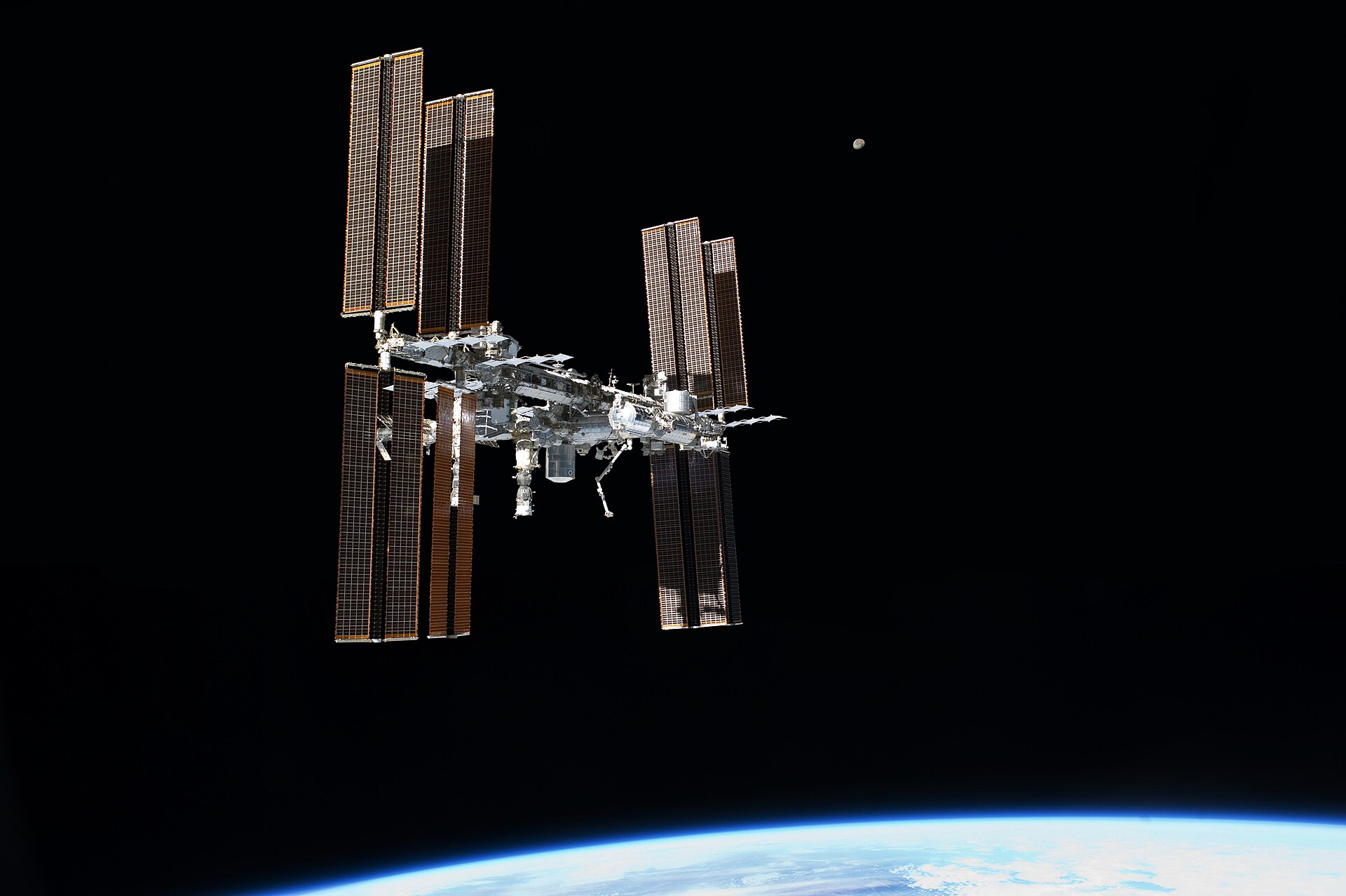
A few more items from space and astronomy.
A first-of-its-kind stellar merger. NASA says data from the James Webb Space Telescope have helped researchers reconstruct, for the first time, a star slightly less massive than the Sun spiralling into, and merging with, a swollen supergiant in the Andromeda galaxy. The system is nicknamed Bao. The paper was published Wednesday in Nature, with Viraj Karambelkar, a NASA Hubble Fellow at Columbia University, as first author. The big star was about seven times the Sun's mass and 350 times its radius. Once the smaller star touched the giant's surface, the merger took only about seven orbits, roughly seven years. Webb observed the system just 47 days after the eruption peaked, the earliest follow-up of such an event.
Also from NASA: scientists say tiny dust particles collected in the stratosphere carry clues to an ancient reservoir of ice rich in heavy oxygen in the Kuiper Belt, beyond Neptune.
Part twelve: What to watch today and this week
Here's what's coming up, all times Copenhagen.
Today, Thursday: NASA confirms and celebrates Voyager 1's one-light-day milestone, and we'll hopefully hear more about the data problem. Anthropic begins trading on Nasdaq, with the market opening at 15:30. Watch SpaceX shares too, given the compute relationship.
Tonight into Friday: USSF-317 on Falcon 9 from Vandenberg, with a window from 03:46 to 07:46 on Friday morning. Backup 05:26 on Saturday.
Friday: CRS-35 Dragon undocking, no earlier than 18:05, with coverage from 17:45, if the Pacific weather cooperates.
Saturday: NROL-136 on Falcon 9 from Vandenberg, 13:30 to 14:00. And Dragon splashdown, no earlier than 23:04.
Monday: USSF-266 on Falcon 9, window opening 17:04. And from last week's schedules, an Ariane 64 with Amazon Leo satellites, which matters even more now that Vulcan is grounded. I haven't re-checked that Ariane time today.
At any time: more from ULA, an official Starship Flight 16 date, Grok 4.8's general release, Cybercab service in Dallas, and any concrete movement on a Tesla–SpaceX merger.
Wrap-up
So, to sum up.
At the DealBook Summit, Elon Musk said Tesla and SpaceX would "probably" be better together, but that any merger needs shareholder votes and shouldn't automatically trigger his Tesla pay package. He also announced a driverless six-to-seven-seat Model Y, and said he feels "pretty foolish" about his midterm spending.
Anthropic priced a record-setting IPO at 83 dollars a share, raising 81.3 billion dollars, and starts trading today. SpaceX shares rose 1.27 percent to 143.50; Tesla rose 0.95 percent to 383.72.
ULA says the Vulcan failure came from an inadequate fuel supply to the BE-4 engines, not the engines themselves. Good news for Blue Origin, if it holds, but Vulcan remains grounded.
The CRS-35 Dragon stayed at the station because of Pacific weather and is now due to leave no earlier than Friday at 18:05. USSF-317 launches no earlier than 03:46 on Friday. And Cameron County said no to a tax break for SpaceX's Starbase data centre.
Tesla now has 1,507 robotaxis registered in Texas, ahead of Waymo, and the Cybercab sales contract, per Axios, comes with a lot of strings attached.
And Voyager 1 is now one light-day from home, still pointing at us, still sending a signal, but for now, not sending data. Engineers are on it, with a two-day round trip for every question.
That's your nyhedsbrief for Thursday the nineteenth of November. Thanks for listening, and have a good day.